

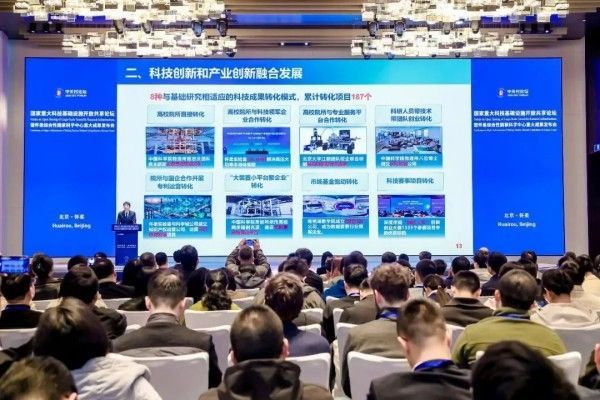
On March 26, the Zhongguancun Forum parallel session—the Forum on Open Sharing of Large-Scale Scientific Research Infrastructures & Conference on Major Achievements of Beijing Huairou National Comprehensive Science Center—themed “Openness and Sharing · Exchange and Cooperation,” was held at the Urban Living Room of Huairou Science City. The forum focused on frontier innovation in material science, promoted high-level international scientific research collaboration, released the operational effectiveness of large-scale scientific research infrastructures and original scientific breakthroughs, enhanced the international influence of Huairou Science City, and demonstrated the solid achievements in building national strategic sci-tech capacity.
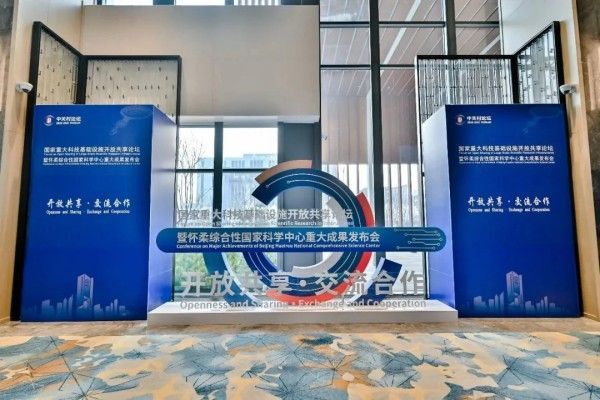
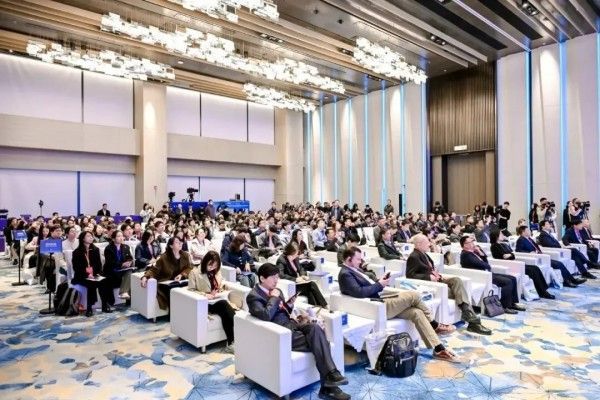
The forum was hosted by the People’s Government of Beijing Municipality, National Development and Reform Commission, and Chinese Academy of Sciences, and organized by the Beijing Municipal Commission of Development and Reform, Beijing Municipal Science & Technology Commission, Administrative Committee of Zhongguancun Science Park, Administrative Committee of Beijing Huairou Science City, Department of Innovation and High-Tech Development of National Development and Reform Commission, Bureau of Basic Capacity for Science and Technology of Chinese Academy of Sciences, Institute of Physics of Chinese Academy of Sciences, and Beijing Huairou Science City Construction and Development Co., Ltd. Approximately 300 participants attended, including scientists from national large-scale scientific research infrastructures at Beijing Huairou National Comprehensive Science Center, overseas experts and scholars, and representatives from institutional and corporate users of scientific facilities.
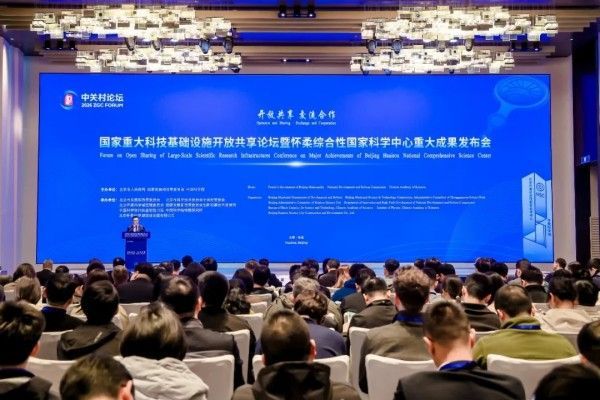
This event, using the open sharing of large research infrastructures as a bond, is dedicated to building an international scientific research exchange platform with global influence, promoting coordinated linkage and win-win development of domestic and international sci-tech innovation resources. As one of the four comprehensive national science centers in China, Beijing Huairou National Comprehensive Science Center serves as a crucial pillar of the Beijing (Beijing-Tianjin-Hebei) International Innovation Center, injecting strong momentum into sci-tech innovation and regional coordinated development.
Release of Development Report of Beijing Huairou National Comprehensive Science Center
Ren Zhongbao, Deputy Director-General of the Department of Innovation and High-Tech Development of the National Development and Reform Commission, stated that since its approval in 2017, Beijing Huairou National Comprehensive Science Center has seen the launch of construction for a batch of major science and technology facilities, the implementation of major projects, and the deepening of major reforms, transforming from a beautiful planning blueprint into vivid reality. During the 15th Five-Year Plan period, we will guide further aggregation of facilities toward comprehensive national science centers.
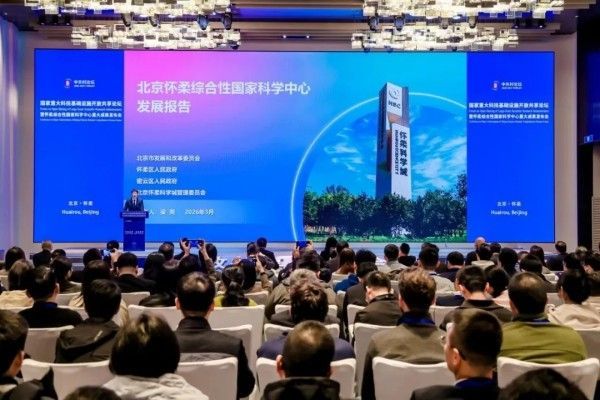
The development of Beijing Huairou National Comprehensive Science Center has accumulated substantial momentum. With a planned area of 100.9 square kilometers, by the end of the 14th Five-Year Plan period, nearly 60% of the planned construction scale had been completed, the planning implementation rate of the starting area reached 85%, infrastructure completion reached 91%, and the urban framework has essentially taken shape.
Focusing on five scientific pillars (SMILE)—space science, material science, information and intelligence science, life science, and earth system science—as well as the energy sector, scientific research breakthroughs are pursued. Strategic sci-tech capacity, with national laboratories, national research institutions, high-level research universities, and leading sci-tech enterprises as the mainstay, is accelerating its aggregation.
This is one of the areas with the densest concentration of large-scale scientific research infrastructures globally, with 37 scientific facilities planned, including 4 out of 6 large research infrastructures that have passed national acceptance and are officially operational. Currently, 17 scientific facilities are open to the world, serving over 1,000 innovation entities across more than 30 countries and regions. Looking toward the 15th Five-Year Plan period, the science center has reserved a batch of new scientific facilities and will maintain an annual investment intensity of approximately 20 billion RMB, further promoting the agglomeration development of scientific facilities.
Core technologies are achieving intensive breakthroughs, and top-tier talent is accelerating its aggregation. Over 150 major achievements emerge annually. The Synergetic Extreme Condition User Facility (SECUF) set a new world record for “all-superconducting user magnets.” The world’s first laser proton cancer therapy device was unveiled, and the world's first native electric power professional large model was officially released. In 2025 alone, the science center attracted 15 new CAS Members, bringing its talent pool to 33 Nobel-caliber scientists and 26,000 researchers, with the research workforce growing at an average annual rate of 10%.
Comprehensive efforts are being made to ensure factor supply, and policy dividends are being continuously released. Over 10 international characteristic industrial parks, including future materials and future energy, have been established, with 14 million square meters of available industrial space. A batch of intelligent computing centers has been deployed, high-quality scientific datasets have been aggregated, and a scientific research data zone has been created. Linking national and municipal fund systems, a sci-tech innovation fund totaling tens of billions of RMB has been established, implementing the “hundred-billion-level capital pool” innovation action plan guided by fiscal funds, supported by financial institutions, and followed by social capital. The “1+N” innovation policy system has been formed, with policies such as “Ten Measures for Youth Friendliness” and “Evaluation and Incentive Measures for Operation and Management of Large-Scale Scientific Research Infrastructures” currently being implemented.
Continuous improvements are being made to high-quality urban supporting facilities, dedicated to building an “ideal city” suitable for research, career development, and living. A direct and seamless transportation system is being constructed, with key projects such as the Beijing-Miyun Expressway and Huairou-Miyun Railway being advanced. Nearly 30,000 units of diversified talent housing are being provided, with quality education and medical resources such as Beijing No. 3 Experimental School, Zhongguancun No. 3 Primary School, and Huairou-Miyun Medical Center being introduced. Vibrant and open commercial districts and living communities are being created, building a high-end residential and travel ecosystem.
International openness and cooperation are being continuously strengthened, significantly enhancing the science center's international influence. Large-scale scientific programs such as the “International Meridian Circle Program (IMCP)” and “Digital Life” have been initiated, with over 200 events held annually, including the International Congress of Basic Science (ICBS).
Bringing Together Global Talent to Chart a New Path for Facility Openness and Research Collaboration
At this forum, five renowned scientists delivered keynote presentations on open cooperation of scientific facilities and research progress, including Ho-kwang Mao, Member of the National Academy of Sciences, USA; Wang Qiuliang, Member of the Chinese Academy of Sciences; Ivan Božović, Member of the European Academy of Sciences; Feng Donglai, Member of the Chinese Academy of Sciences; and Philip J.W. Moll, Director of the Max Planck Institute for the Structure and Dynamics of Matter, Germany. They shared and exchanged ideas with attending experts and scholars, systematically summarizing practical experiences of deep integration between international open sharing of scientific facilities and frontier industrial applications, providing important insights and practical guidance for open operation of scientific facilities, international science and technology cooperation, and accelerating the formation of new-quality productive forces, which is of significant guiding importance.
Openness and Collaboration Fuel a Stream of Breakthroughs at Major National Facilities
Over the past year, Beijing Huairou National Comprehensive Science Center, relying on large-scale scientific research infrastructures and related platforms, has achieved a new batch of major breakthroughs. The Chinese Academy of Sciences, Peking University, and Beijing Institute of Mathematical Sciences and Applications (BIMSA) jointly released 8 representative major breakthrough achievements of Beijing Huairou National Comprehensive Science Center.
National Space Science Center, Chinese Academy of Sciences · Ground-based Space Environment Monitoring Network (CMP Phase II)
The Meridian Project reveals the response characteristics and mechanisms of major space weather events, establishing for the first time a complete causal chain from magnetospheric energy injection to thermospheric composition changes, and then to extreme ionospheric responses. It reveals extreme electron density depletion in the Northern Hemisphere ionosphere and its significant asymmetry with the Southern Hemisphere, advancing current understanding of the coupled physical processes of solar wind-magnetosphere-ionosphere storms.
Institute of Atmospheric Physics, Chinese Academy of Sciences · Earth System Science Numerical Simulator Facility (EarthLab)
The “IAP Weather-Climate Integrated Prediction System: WANXIANG GAP” technical system overcomes international challenges such as traditional separation of assimilation and forecasting, insufficient utilization of sparse observations, and instability of AI forecasting. It achieves global meteorological element forecasting with probability forecasting skills reaching world-class levels, significantly improving the accuracy of typhoon track and intensity forecasting and severe convective weather forecasting.
Institute of Physics, Chinese Academy of Sciences · Synergetic Extreme Condition User Facility (SECUF)
Ultrashort laser pulse width breaks through 50 attoseconds, achieving internationally leading ultrafast temporal resolution capabilities. This ultrashort pulse width and high photon energy water-window band attosecond light pulse source will provide strong support for the facility to conduct attosecond time-resolved electron dynamics, and provide key support for frontier research such as electron dynamics observation and quantum material characterization
Aerospace Information Research Institute, Chinese Academy of Sciences · Aerial Remote Sensing System
China’s first set of airborne 3D ice-penetrating radar for glaciers has achieved a major breakthrough. Independently developed, this is China’s first multi-frequency multi-polarization imaging radar for 3D glacier penetration detection. It successfully obtained glacier thickness and accurately estimated glacier reserves on typical glaciers in the Qilian Mountains, with overall performance reaching internationally leading levels.
Aerospace Information Research Institute, Chinese Academy of Sciences · China Remote Sensing Satellite Ground Station
The China Remote Sensing Satellite Ground Station is officially operational with a five-station network, capable of undertaking data reception tasks for a total of 25 national land observation satellites, including the Resource series, Environment and Disaster Reduction series, and Gaofen series.
Peking University · Interdisciplinary Institute of Light-Elements Quantum Materials (LEQM)
First discovery of “solid-like” water reveals the physical mechanism of ultrafast transport behavior in nanofluidics. This is a model example of China overcoming fundamental scientific challenges relying on independent instrumental equipment, successfully resolving long-standing key controversies in the nanofluidics field, and systematically revealing unique liquid structures and transport behaviors at the nanoscale.
Peking University · Multimode Trans-Scale Biomedical Imaging Facilities
The independently developed high-performance 4Pi-SIM optical-mechanical system breaks through the bottleneck of live-cell three-dimensional isotropic 100-nanometer super-resolution imaging. It can clearly reveal complex and delicate subcellular structures in various cell types, achieving time-lapse imaging at three-dimensional isotropic 100-nanometer resolution across hundreds of time points over several hours.
Beijing Institute of Mathematical Sciences and Applications (BIMSA)
Spherical nature of the boundary at infinity of Betti moduli spaces (dual boundary complex). For the first time, it verifies the correctness of the weak geometric P=W conjecture regarding the topological structure of moduli space boundaries in a broad and important class of nontrivial cases.
Looking ahead, we will continue to advance facility construction and operation around national strategies, optimize facility management and operation mechanisms, promote efficient utilization of scientific facilities through “one facility, one solution” approaches, produce more major original achievements, promote deep integration of sci-tech innovation and industrial innovation, provide greater support for global innovation cooperation and industrial innovation development, and strive to build Beijing Huairou National Comprehensive Science Center into a world-renowned comprehensive national science center.